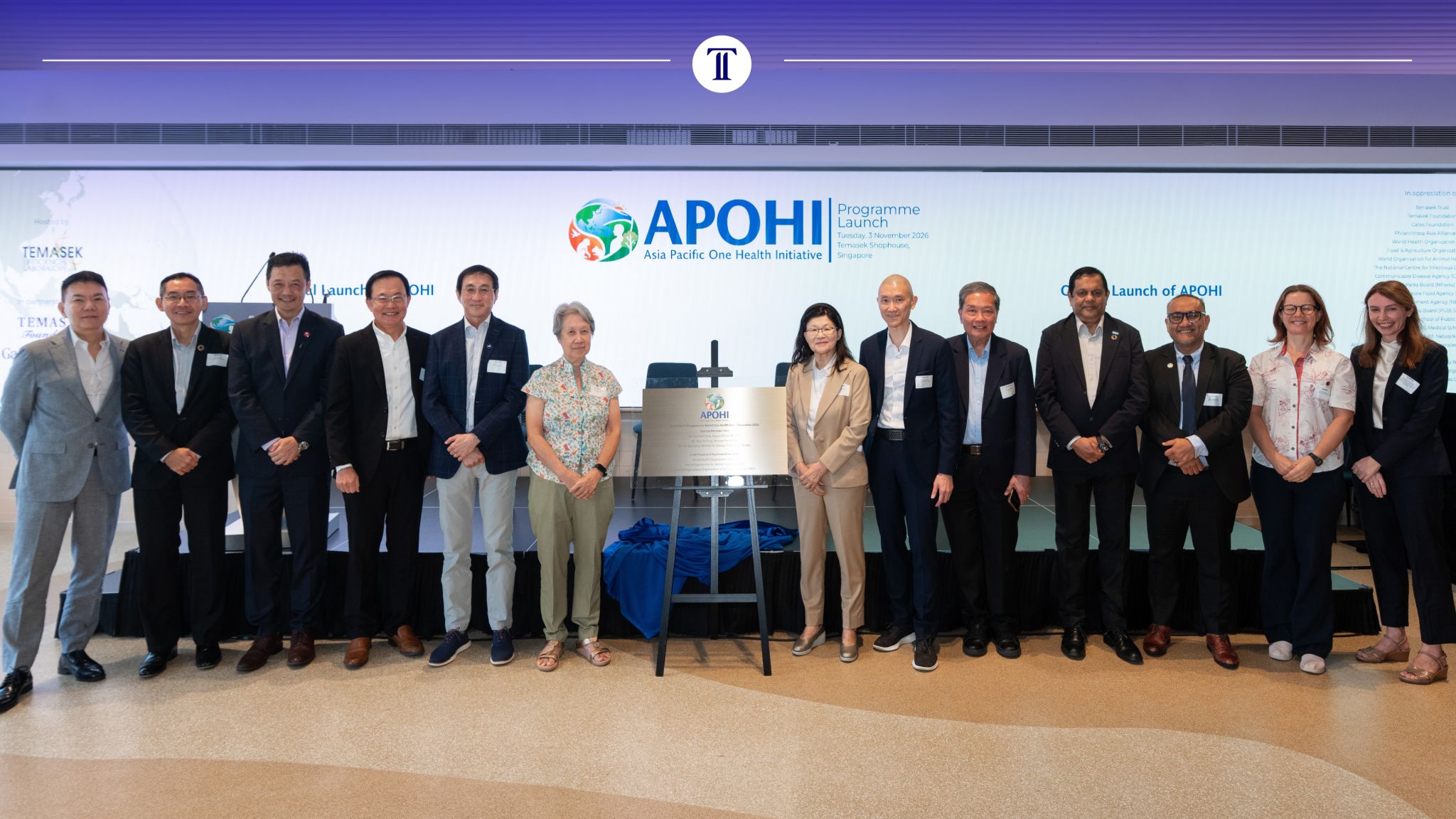


As human activity and environmental changes bring people into closer contact with wildlife, the risk of emerging infectious diseases is growing. Yet human, animal, and environmental health surveillance systems often operate separately, making it harder to detect early warning signals and act before outbreaks occur.
Bridging these gaps is the focus of the Asia Pacific One Health Initiative (APOHI), launched by Temasek Life Sciences Laboratory (TLL) on 3 November 2026, World One Health Day.
Held at Temasek Shophouse, the launch brought together around 100 delegates from 12 Asia-Pacific countries, alongside representatives from international organisations, including the World Health Organization (WHO), World Organisation for Animal Health (WOAH), and Food and Agriculture Organization of the United Nations (FAO).
Led by and hosted at TLL, APOHI is co-led by Professor Leo Yee Sin and Dr Ian Cheong of TLL, and Dr Lee Fook Kay of Temasek Trust. The initiative is supported by Temasek Foundation, the Gates Foundation, and the Health for Human Potential Community by the Philanthropy Asia Alliance (PAA).
APOHI aims to connect scientific expertise and surveillance data across human, animal, and environmental health, advancing predictive intelligence and helping countries identify and respond to emerging disease threats earlier.
Understanding Disease Risks in a Changing Environment
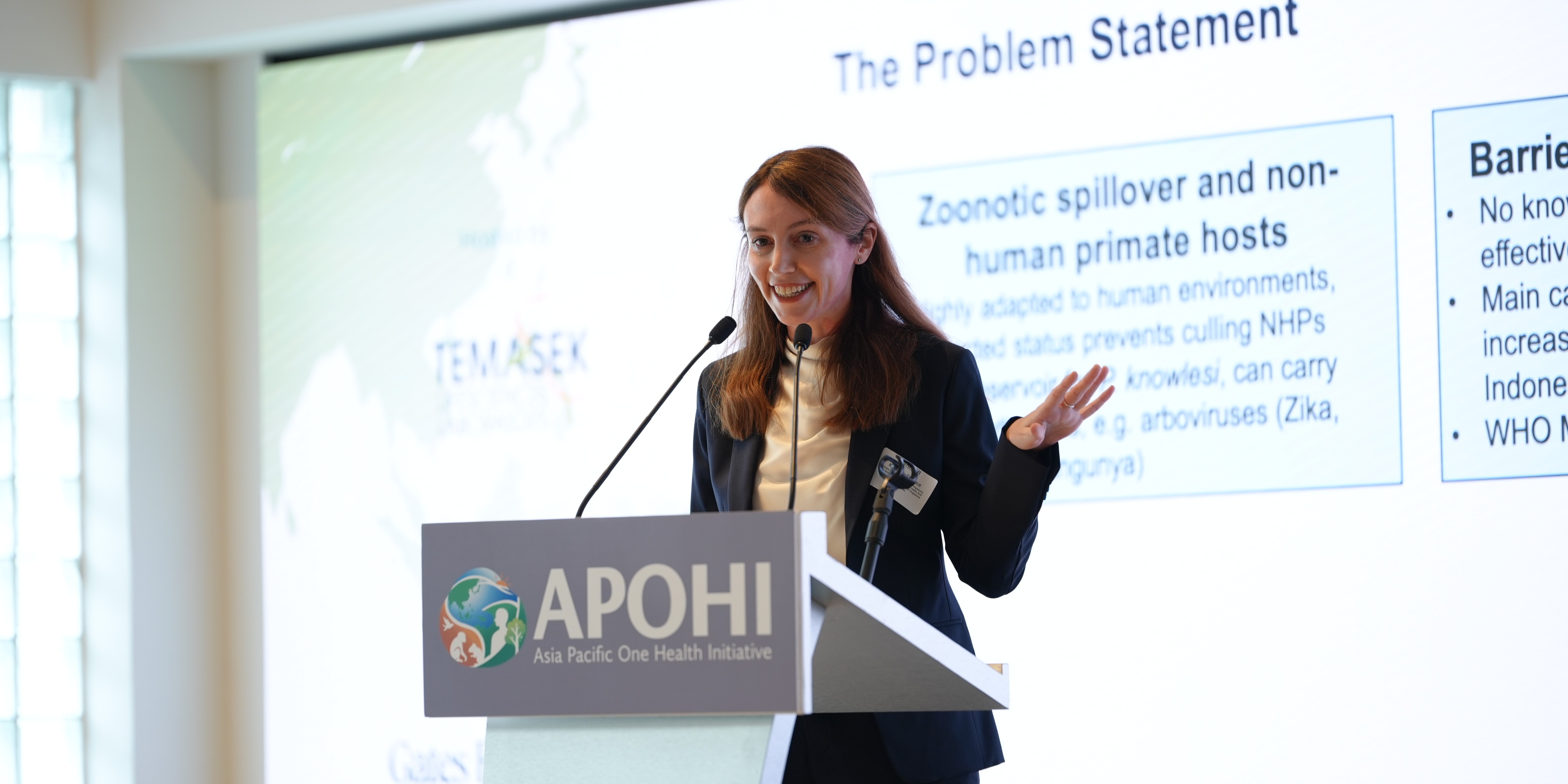
Associate Professor Kimberly Fornace presenting Project RIMBA
APOHI's first regional programme focuses on zoonotic malaria in Borneo, where changes in forests, land use, and human activity are reshaping interactions between people, wildlife, and mosquitoes.
Caused by the parasite Plasmodium knowlesi, zoonotic malaria spreads to humans through mosquitoes that have bitten infected macaques. While Malaysia has made significant progress in eliminating other forms of malaria, thousands of zoonotic malaria cases continue to be reported annually. Its transmission through wildlife presents challenges for conventional malaria control.
At the launch, Associate Professor Kimberly Fornace from the Saw Swee Hock School of Public Health, National University of Singapore, introduced Project RIMBA, which brings together partners from Malaysia, Indonesia, Brunei Darussalam, and Singapore.
The project will combine AI, satellite data, and field and clinical surveillance to better understand how environmental changes affect transmission risks. Across different development and conservation settings in Borneo, partners will work to develop more targeted surveillance approaches and decision-support tools that can inform preventive measures.
Beyond malaria, the programme provides an opportunity to develop surveillance and analytical capabilities that could be applied to other emerging disease threats.
Connecting Data and Scientific Evidence to Public Health Action

Panel discussions
Discussions at the launch explored how APOHI can bring together scientific expertise and information from different sectors to support earlier, more coordinated public health responses.
A central challenge is enabling trusted data sharing across borders and institutions. Clear safeguards around who can access, validate, and use information are essential, particularly where human health, wildlife, and environmental surveillance systems operate under different national mandates.
Building on existing systems is equally important. Established surveillance networks, reference laboratories, and government institutions provide a foundation for joint risk assessments, while closer links between researchers and public health authorities can help translate findings into practical decisions.
The discussions also highlighted the importance of local context. Predictive models and AI-enabled tools need to be informed by field evidence and ecological conditions to provide useful guidance for prevention. In Borneo, for example, understanding local mosquito populations and changing land-use patterns can help identify where surveillance and interventions may be most effective.
Financing and Sustaining Regional Preparedness
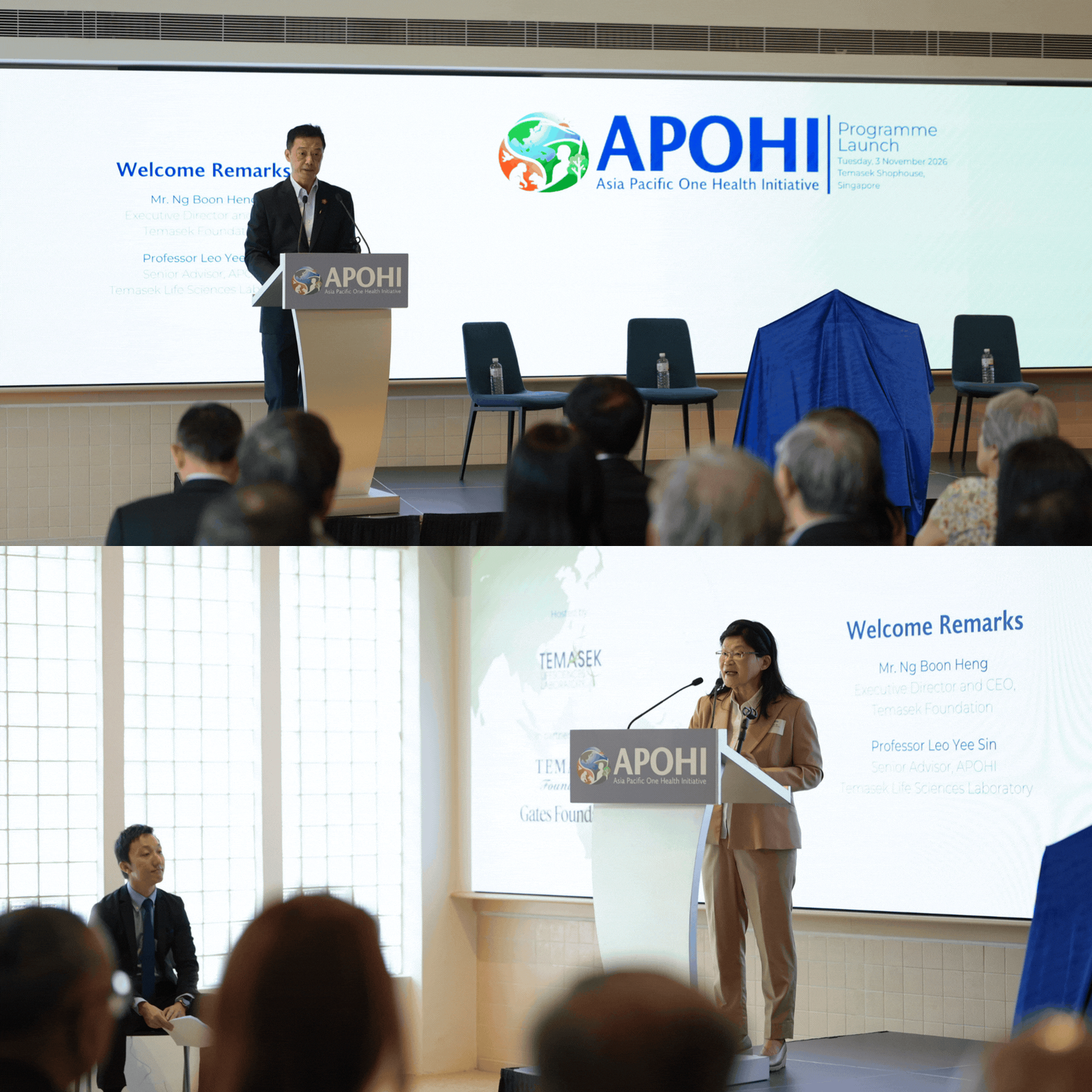
Mr. Ng Boon Heong and Prof. Leo Yee Sin delivering the opening address
Pandemic preparedness presents a particular challenge for investment: its success is often measured by outbreaks that never happen. With global health funding becoming more constrained, the launch discussions highlighted the importance of using available resources strategically and building capabilities that can be sustained over time.
Country ownership and co-creation emerged as important foundations for this work. Programmes developed around national priorities, with clear evidence of their value, are better positioned to attract sustained support and become embedded in existing public health systems.
Philanthropic capital can help by taking on early-stage risks, supporting new approaches, and convening partnerships across sectors. Beyond initial funding, the priority is to strengthen the scientific, institutional, and operational capabilities that enable countries to maintain surveillance, assess risks, and act on emerging threats.
Over the next decade, APOHI aims to develop into a trusted regional platform for One Health collaboration, with its initial programme in Borneo providing a starting point for approaches that could be adapted to other disease threats.
To stay updated, subscribe to our Impact Brief newsletter and follow us on LinkedIn, Instagram, Facebook, and YouTube.


